
How Stimulating a Single Cranial Nerve is Reshaping Neurorehabilitation
Every year, 12 million people from all over the world survive a stroke or Traumatic Brain Injury, also known as TBI. For some patients recovery can be both long and challenging, and while conventional treatments like physical therapy, occupational therapy, and speech therapy remain a paramount part of rehabilitation, some patients find that progress slows down.
This is when some patients may choose to explore newer approaches to neurorehabilitation, including Vagus Nerve Stimulation or VNS.
Vagus Nerve Stimulation is a form of neuromodulation that uses electrical stimulation to activate the vagus nerve. While Vagus Nerve Stimulation doesn’t replace traditional rehabilitation methods, it is designed to work alongside it to help make the brain make better use of the pathways that remain after an injury.
The vagus nerve is one of the longest cranial nerves in the body, beginning at the brainstem and travelling through the neck and into the chest and abdomen. Therefore, the vagus nerve carries information between the brain and different parts of the body. Because of the nerve’s connection with areas involved in learning, memory and brain activity, by stimulating it, it can influence the way in which the brain responds during rehabilitation.
At Verita Neuro we offer Vagus Nerve Stimulation for Stroke and Traumatic Brain Injury survivors whose progress has slowed down with conventional treatments. We offer Vagus Nerve Stimulation treatment alongside Stem Cell treatment and an intensive rehabilitation program with the aim of supporting the patient to improve movement, speech and other functions affected by the injury.
What is Neuroplasticity?
Neuroplasticity is the brain’s ability to adapt and reorganise itself. After a stroke or brain injury, some of the pathways that are responsible for movement, speech or other bodily functions can become damaged. However, other pathways may remain intact.
Rehabilitation is used to encourage the brain to make use of the remaining pathways and, where possible, develop stronger connections. Vagus Nerve Stimulation is used to help support this process by pairing it with a specific movement or rehabilitation. The electrical signal sent through Vagus Nerve Stimulation may help to reinforce the brain circuits that are involved in rehabilitation.
Vagus Nerve Stimulation is used to help make conventional rehabilitation methods more effective by helping the brain concentrate on the movements it is practising and, in turn strengthening the neural connections involved.
What Happens when the Vagus Nerve is Stimulated
The vagus nerve is one of the major nerves that carries signals from the body to the brain and when it is stimulated the signals reach different areas of the brainstem that are connected to the systems involved in learning and memory. Chemicals like norepinephrine and acetylcholine levels can be released in the brain, which are directly involved with Neuroplasticity.
What is Vagus Nerve Stimulation Treatment for Stroke?
If your medical team decides that Vagus Nerve Stimulation could be beneficial for you, you will have a small procedure that involves implanting a small pulse generator under the skin of the chest and below the collarbone.
The generator will then be connected to electrodes that are positioned around the vagus nerve on the left side of the neck. Once activated, the device will send gentle electrical pulses through the vagus nerve and towards the brain.
The procedure is minimally invasive compared to other neuromodulation methods that require direct stimulation of the brain.
Can Vagus Nerve Stimulation also Reduce Inflammation?
Vagus Nerve Stimulation can have other effects beyond neuroplasticity. Research into the role Vagus Nerve Stimulation plays has also found that by stimulating the vagus nerve the body’s inflammatory responses can also be influenced.
When dealing with Traumatic Brain Injuries, this can be particularly interesting because inflammation, swelling and oxidative stress can contribute to additional damage after the initial injury.
Early research suggests that Vagus Nerve Stimulation may help to reduce some of these inflammatory processes and help support a better environment for recovery, however many of these studies are small or preclinical at the moment.
A Stroke can damage different areas of the brain including the areas responsible for movement, sensation, speech, swallowing, memory, and other functions. Recovery can vary drastically between patients, with some making significant progress through traditional rehabilitation methods, while others experience lasting disability even after years of therapy.
The majority of research into Vagus Nerve Stimulation has focused on patients with persistent arm and hand weakness following Stroke. In fact, a major clinical trial published in The Lancet investigated how effective Vagus Nerve Stimulation is when paired with rehabilitation for upper-limb recovery after Stroke. This particular research helped Vagus Nerve Stimulation move from an experimental treatment towards a clinically available option for Stroke patients.
Why Combine Vagus Nerve Stimulation with Rehabilitation?
Research has suggested that Vagus Nerve Stimulation is most useful when combined with specific rehabilitation exercises, rather than as a stand alone treatment. Vagus Nerve Stimulation does not replace physiotherapy or occupational therapy, and instead aims to stimulate the brain when the patient is actively practising a particular movement.
For example, if a patient is working on opening their hand during rehabilitation, stimulation should be timed alongside that activity. The theory is that the brain will receive the two signals together and in turn, the physical practice of the movement combined with the Vagus Nerve Stimulation signal will help reinforce the relevant neural pathway.
Over time, repeated practice of the movement may help to strengthen these pathways and improve the patient’s ability to perform the movement.
Can Vagus Nerve Stimulation Help Years After a Stroke?
One of the main reasons Vagus Nerve Stimulation has created such an interest is the potential use in patients who have reached a plateau in their recovery. For a large percentage of Stroke survivors, spontaneous neurological recovery is more likely in the earlier stages following stroke. However, the brain can still retain its ability to change and adapt after the initial period.
At Verita Neuro, Vagus Nerve Stimulation is usually considered for patients who are medically stable. Our program may be considered for patients who are between two and four months post Stroke.
What Improvement may be Possible?
Patients undergoing Vagus Nerve Stimulation alongside rehabilitation at Verita Neuro may experience improvements in areas including:
- Voluntary movement
- Motor function
- Speech and swallowing
- Spasticity
- Cognitive function
- Neuropathic pain
- Other activities affected by neurological injury
However, as with different types of brain injuries and strokes, everyone’s experience is different and outcomes will vary from person to person. Our goal is to support your brain’s ability to reorganize and make better use of its remaining pathways, rather than guarantee recovery or partial recovery.
The extent of your recovery can depend on factors like the severity and type of your injury, as well as your general health and your participation in rehabilitation.
Traumatic Brain Injury can cause both immediate and secondary damage to the brain. Some patients experience inflammation, swelling, and other biological processes that further injure the brain after the initial trauma.
What Does The Research Tell Us About Vagus Nerve Stimulation for Traumatic Brain Injury?
The research into Vagus Nerve Stimulation for Traumatic Brain Injury is less developed than the evidence for stroke for the time being. However, small human studies have investigated Vagus Nerve Stimulation in people with severe Traumatic Brain Injury, including those with different levels of consciousness such as minimally conscious or vegetative.
These ongoing studies are looking into whether the stimulation of the vagus nerve can help influence the brain networks involved in alertness and consciousness.
While the early findings are interesting, the evidence remains preliminary because so far the studies have only included small numbers of patients.
How is Vagus Nerve Stimulation Used at Verita Neuro for Brain Injury?
Verita Neuro offers Vagus Nerve Stimulation to a number of selected patients with Traumatic Brain Injuries, such as those who have suffered a Stroke. We offer the treatment alongside Stem Cells Treatment and intensive rehabilitation, and it is included as part of a wider program and usually combined with other treatments including physical therapy, occupational therapy, and speech therapy.
The idea is to support neuroplasticity while the patient is actively working on rebuilding functional abilities.
Who is Suitable for Vagus Nerve Stimulation?
Vagus Nerve Stimulation may be considered for patients who have previously suffered an ischemic or haemorrhagic stroke, as well as people living with a Traumatic Brain Injury. However, your diagnosis doesn’t immediately qualify you for the treatment.
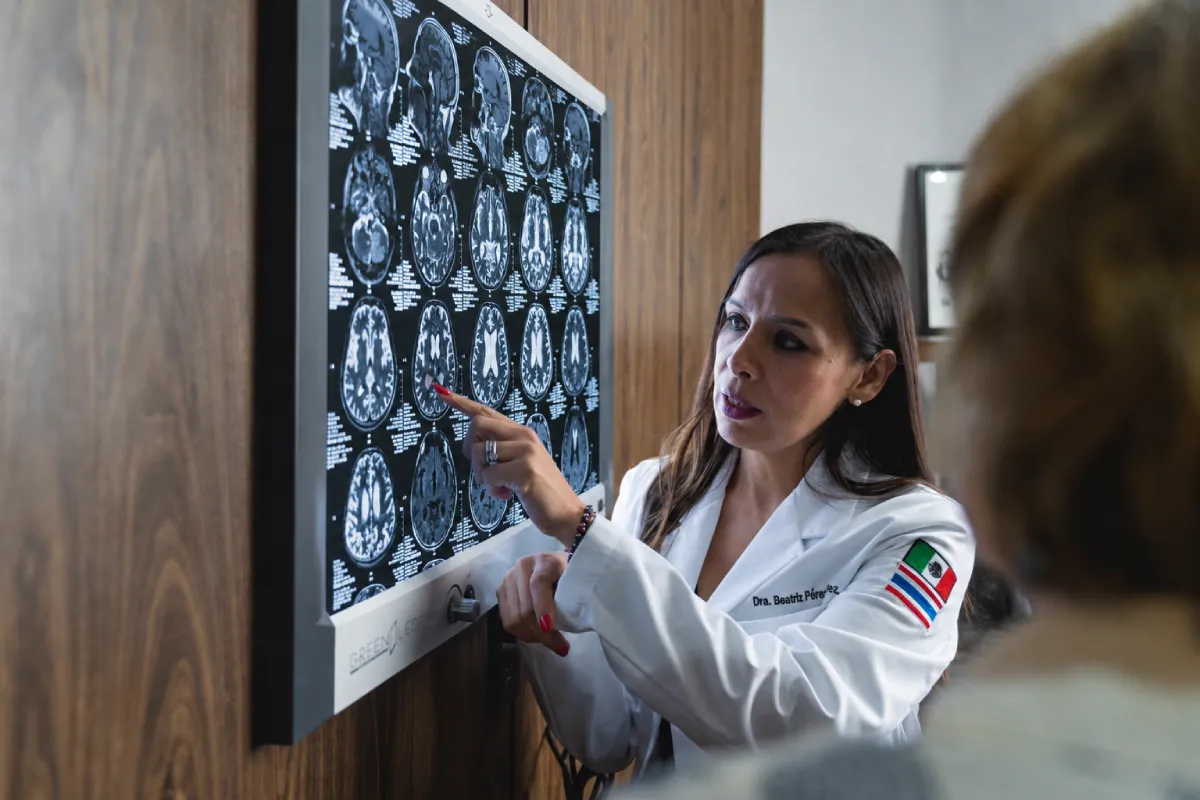
Before we choose what treatment may be best for you, our expert team at Verita Neuro will look into your medical history, brain scans, and current levels of function before we decide whether or not Vagus Nerve Stimulation is the right treatment for you.
Your goals and overall health will also be considered, because all neurological injuries affect people differently.
For this reason, Vagus Nerve Stimulation isn’t a “one size fits all” treatment, instead the treatment is tailored around the findings from an initial medical assessment.
Rehabilitation after Vagus Nerve Stimulation
Rehabilitation remains a central part of your ongoing treatment. At Verita Neuro, we will create a complete program that includes physical and occupational therapy, as well as physical, speech, and occupational therapy where needed.
This provides us with the ability to support the brain’s ability to learn at the same time as giving it something specific to learn. Regular practice and rehabilitation tasks are therefore a paramount addition to the Vagus Nerve Stimulation treatment.
What About Safety?
Like any surgical procedure, Vagus Nerve Stimulation also carries potential risks and side effects. Common side effects can include temporary voice changes, swallowing difficulties, nausea, skin irritation, changes in taste, and discomfort around the implantation site.
Our medical team will discuss the full range of potential side effects before you begin treatment.
A Realistic Outlook
Vagus Nerve Stimulation does not provide a guarantee of recovery, and it’s always important for both patients and families to maintain realistic expectations. The amount of improvement can vary due to a whole range of factors, from the type and severity of the neurological injury, to the patient’s overall health and participation in rehabilitation.
Some patients will experience substantial improvements, while others may see smaller changes that make a meaningful difference to everyday activities. At Verita Neuro, our focus is on assessing each patient and developing a treatment pathway around their specific injury, abilities, and goals.
For patients who have reached a plateau after stroke or brain injury, Vagus Nerve Stimulation offers another avenue for exploring whether the brain’s remaining pathways can be encouraged to work more effectively.

References
- Dawson J, Liu CY, Francisco GE, et al. Vagus nerve stimulation paired with rehabilitation for upper limb motor function after ischemic stroke (Vagus Nerve Stimulation-REHAB): a randomised, blinded, pivotal, device trial. Lancet. 2021;397(10284):1545-1553.
- Dawson J, Engineer ND, Cramer SC, et al. Vagus nerve stimulation paired with rehabilitation for upper limb motor impairment and function after chronic ischemic stroke: subgroup analysis of the Vagus Nerve Stimulation-REHAB device trial. Neurorehabil Neural Repair. 2023;37(6):367-373.
- Francisco GE, Engineer N, Dawson J, et al. Vagus nerve stimulation paired with upper-limb rehabilitation after stroke: two- and three-year follow-up from the pilot study. Arch Phys Med Rehabil. 2023.
- Malakouti N, Serruya MD, Cramer SC, et al. Making sense of vagus nerve stimulation for stroke. Stroke. 2024;55(2):519-522.
- Lin S, Rodriguez CO, Wolf SL. Vagus nerve stimulation paired with upper extremity rehabilitation for chronic ischemic stroke: contribution of dosage parameters. Neurorehabil Neural Repair. 2024;38(8):607-615.
- Ramos-Castaneda JA, Barreto-Cortes CF, Losada-Floriano D, Sanabria-Barrera SM, Silva-Sieger FA, Garcia RG. Efficacy and safety of vagus nerve stimulation on upper limb motor recovery after stroke: a systematic review and meta-analysis. Front Neurol. 2022;13:889953.
- Wang MH, Wang YX, Xie M, et al. Transcutaneous auricular vagus nerve stimulation with task-oriented training improves upper extremity function in patients with subacute stroke: a randomized clinical trial. Front Neurosci. 2023.
- Neren D, Johnson MD, Legon W, Bachour SP, Ling G, Divani AA. Vagus nerve stimulation and other neuromodulation methods for treatment of traumatic brain injury. Neurocrit Care. 2016;24(2):308-319.
- Duke A, Neese SL, Clough RW, et al. Vagus nerve stimulation to augment recovery from severe traumatic brain injury impeding consciousness: a prospective pilot clinical trial. Neurol Res. 2013;35(3):263-276.
- Zhou L, Lin J, Kui G, Zhang J, Yu Y. Neuroprotective effects and mechanisms of vagus nerve stimulation on traumatic brain injury. In: Potential roles of vagus nerve stimulation on traumatic brain injury: evidence from in vivo and clinical studies. Exp Neurol. 2021.
Disclaimer: This article is for general informational purposes and does not constitute medical advice. Individuals considering Vagus Nerve Stimulation for stroke or Traumatic Brain Injury recovery should consult a qualified neurologist or physiatrist to discuss candidacy, risks, and current treatment availability.


